
Do Solar Panels Work During Power Outages?
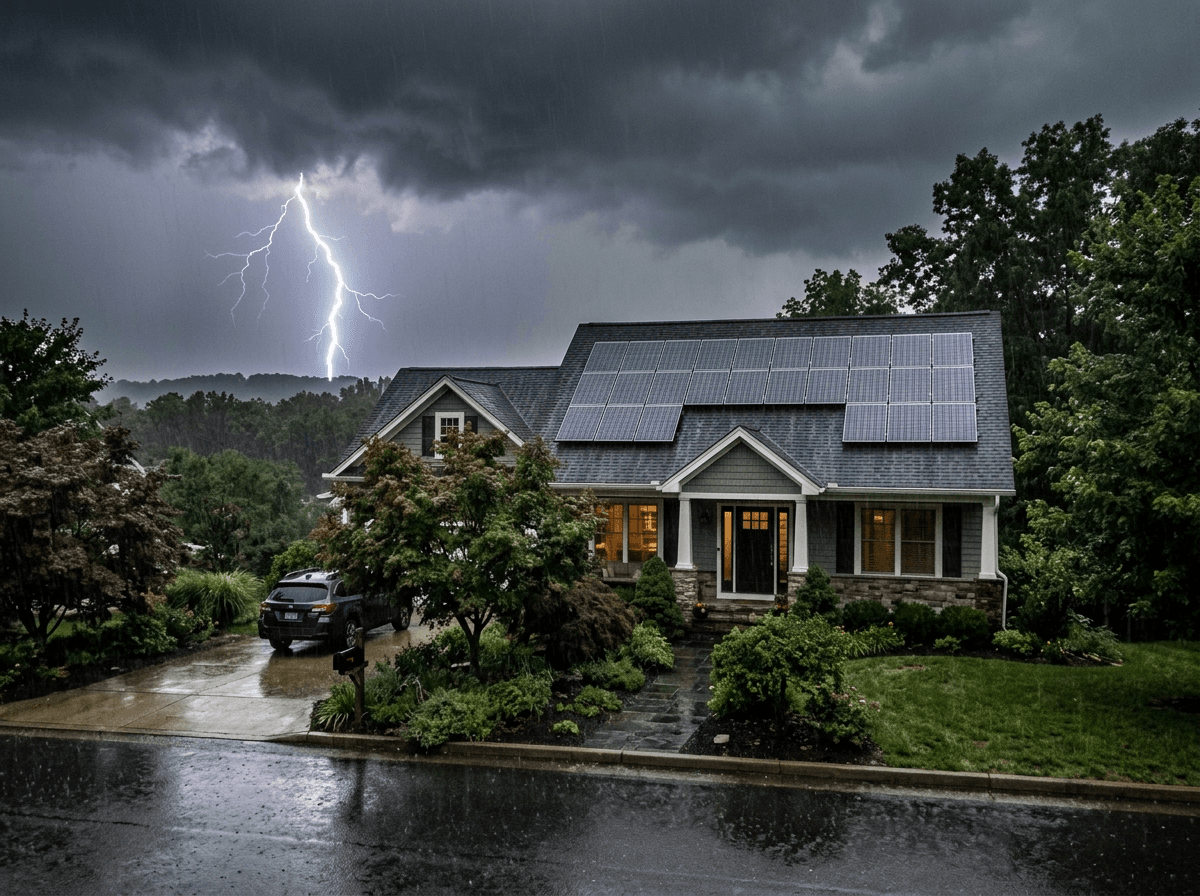
Power outages can happen when you least expect them, leaving homeowners without electricity and searching for reliable ways to keep their homes powered. As solar energy becomes a more popular option for homeowners, many are asking an important question: what happens to a solar system when the power goes out?
For homeowners considering solar or looking to better understand their existing system, knowing how solar responds during an outage is an important part of planning for energy reliability.
In this blog, we'll look at why standard solar systems shut off during an outage, the role of the solar inverter during an outage, how homeowners can maintain power when the grid goes down, and whether solar is a reliable energy source for Pennsylvania homeowners.
Why Does Standard Solar Shut Off During a Power Outage?
Most residential solar systems are connected to the utility grid. These systems are known as grid-tied solar systems because they work alongside your local electric company to provide electricity to your home.
During normal operation, your solar panels generate electricity that can be used to power your household appliances. If your system produces more energy than your home needs, the excess electricity can be sent back to the utility grid.
However, when the electrical grid experiences an outage, a standard solar system automatically shuts down. This shutdown is a built-in safety feature designed to protect both your system and utility workers.
What Does Your Solar Inverter Do During a Power Outage?
Your solar inverter plays an important role in how your solar system responds when the utility grid goes down. It monitors the connection between your solar system and the grid, detects changes in power conditions, and takes the necessary steps to keep the system operating safely.
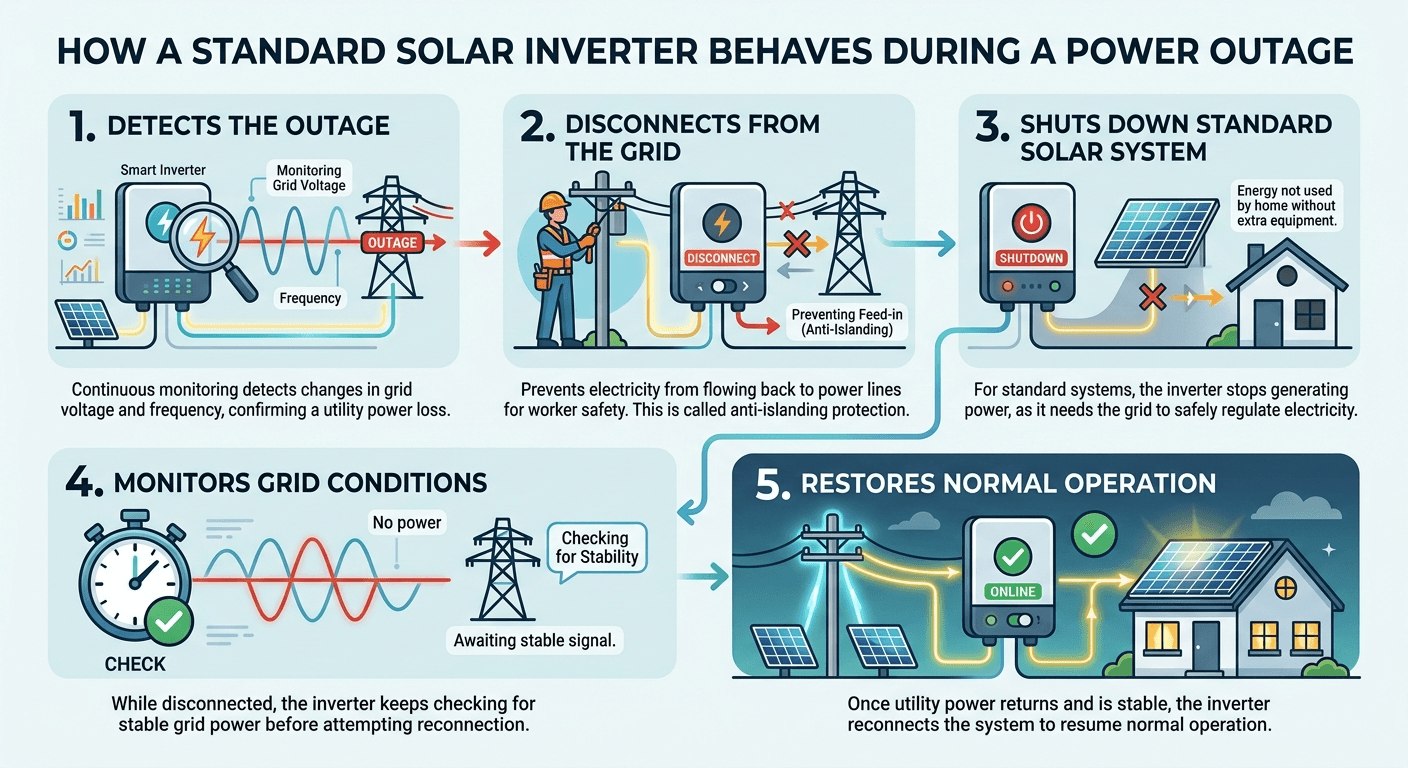
1. Detects the Outage
The first thing your solar inverter does during a power outage is monitor the condition of the electrical grid. Because the inverter continuously communicates with the grid, it can quickly detect changes in voltage and frequency that indicate a loss of utility power.
Once the inverter confirms that the grid is no longer supplying electricity, it begins the safety process required during an outage.
2. Disconnects From the Grid
After detecting an outage, the inverter disconnects your solar system from the utility grid. This prevents electricity generated by your solar panels from flowing back into power lines while utility crews are working to restore service.
This safety feature, known as anti-islanding protection, helps protect utility workers who may be repairing damaged electrical equipment or restoring power in the area.
3. Shuts Down Standard Solar Systems
For a standard grid-tied solar system, the inverter will shut down the system after disconnecting from the grid.
Although your solar panels may still receive sunlight and continue producing electricity, that energy cannot be used by your home without additional equipment. A standard inverter relies on the utility grid to safely regulate and distribute electricity throughout your home.
4. Monitors Grid Conditions
While the solar system is disconnected, the inverter continues monitoring the utility grid to determine when power has been restored. It checks for stable voltage and frequency before reconnecting the system.
5. Restores Normal Operation
Once utility power returns and the grid is confirmed to be stable, the inverter reconnects your solar system to the grid.
After reconnecting, your solar panels can resume generating electricity and continue powering your home as part of normal system operation.
How Can You Maintain Power During an Outage?
If you want your home to continue receiving electricity during a power outage, you need a backup solution that allows your solar system to operate independently from the utility grid.
The two most common options for maintaining power during an outage are:
Each option works differently and offers unique benefits depending on your home's energy needs, the length of the outage, and how much power you want to maintain.
1. Solar Battery Backup
A solar battery backup system stores excess electricity generated by your solar panels for later use. Instead of sending unused energy back to the utility grid, the system saves that power in a battery where it can be accessed when needed.
During a power outage, the battery works with a compatible inverter to provide electricity to your home, helping keep essential systems and appliances running when grid power is unavailable.
2. Backup Generator
A backup generator is a separate power source that produces electricity using fuel such as natural gas, propane, or diesel.
Unlike a solar battery, a generator does not store energy for later use. Instead, it creates electricity while operating and can provide power for extended periods during an outage.
Generators are often a popular choice for homeowners who need backup power for larger electrical loads or want a solution that can support their home through longer-lasting outages.
Is Solar a Reliable Source of Energy in Pennsylvania?
Solar energy is a reliable option for Pennsylvania homeowners looking to reduce their reliance on the utility grid and generate their own electricity. While panels alone may not provide power during outages, pairing your system with battery storage or another backup solution can improve energy reliability when the grid goes down.
Pennsylvania's net metering program also allows eligible homeowners to receive credits for excess electricity their solar panels send back to the grid. These credits can help offset future energy costs and maximize the value of your solar investment.
With the right system design, solar can provide a dependable source of renewable energy while helping homeowners improve energy independence and prepare for future power needs.
Conclusion
Solar energy can help Pennsylvania homeowners reduce reliance on the grid, lower energy costs, and improve energy independence. With the right system design and backup solutions, solar can provide greater reliability during power outages and changing energy needs.
Ready to see if solar is right for your home? Call (484) 350-6829 to schedule a FREE solar assessment with one of our specialists.
Contact Us Today
and Schedule Your
Free Estimate
Special Offer
Get a Referral Fee
For Any Customer You Refer Directly to Us
Knowing when your roof needs to be replaced can help you prevent costly damage to your home. Learn how to identify key warning signs, including curling or missing shingles, excessive granules in your gutters, cracked shingles, and moss or algae growth, and understand when these issues may indicate it's time for a new roof.
Learn what happens to solar panels during a power outage and how backup solutions can keep your home powered.
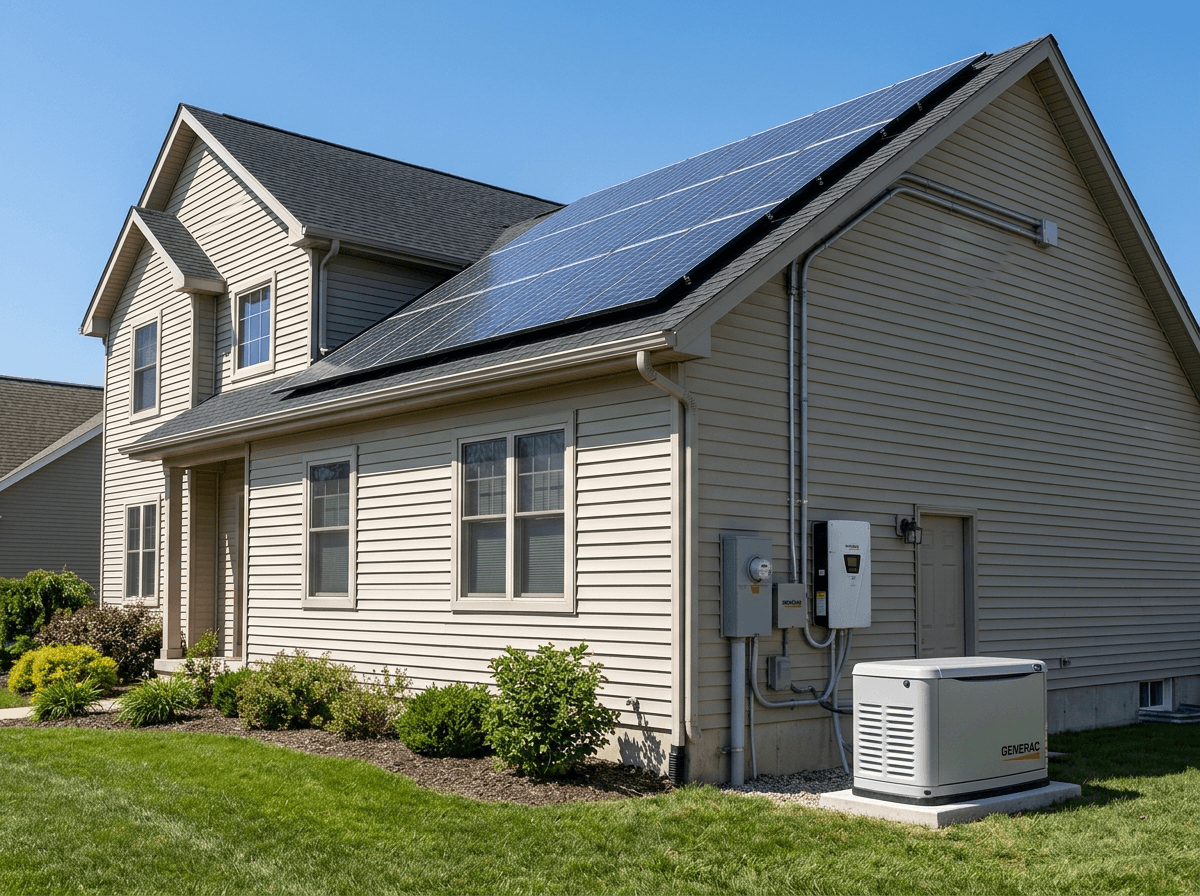
Discover whether you can use a generator with solar panels and how combining solar energy with backup power can keep your home running during outages. Learn the differences between generators and solar battery backups, how they work together, and which solution may be right for your energy needs.