
How Do Solar Batteries Work? Step-by-Step Explanation
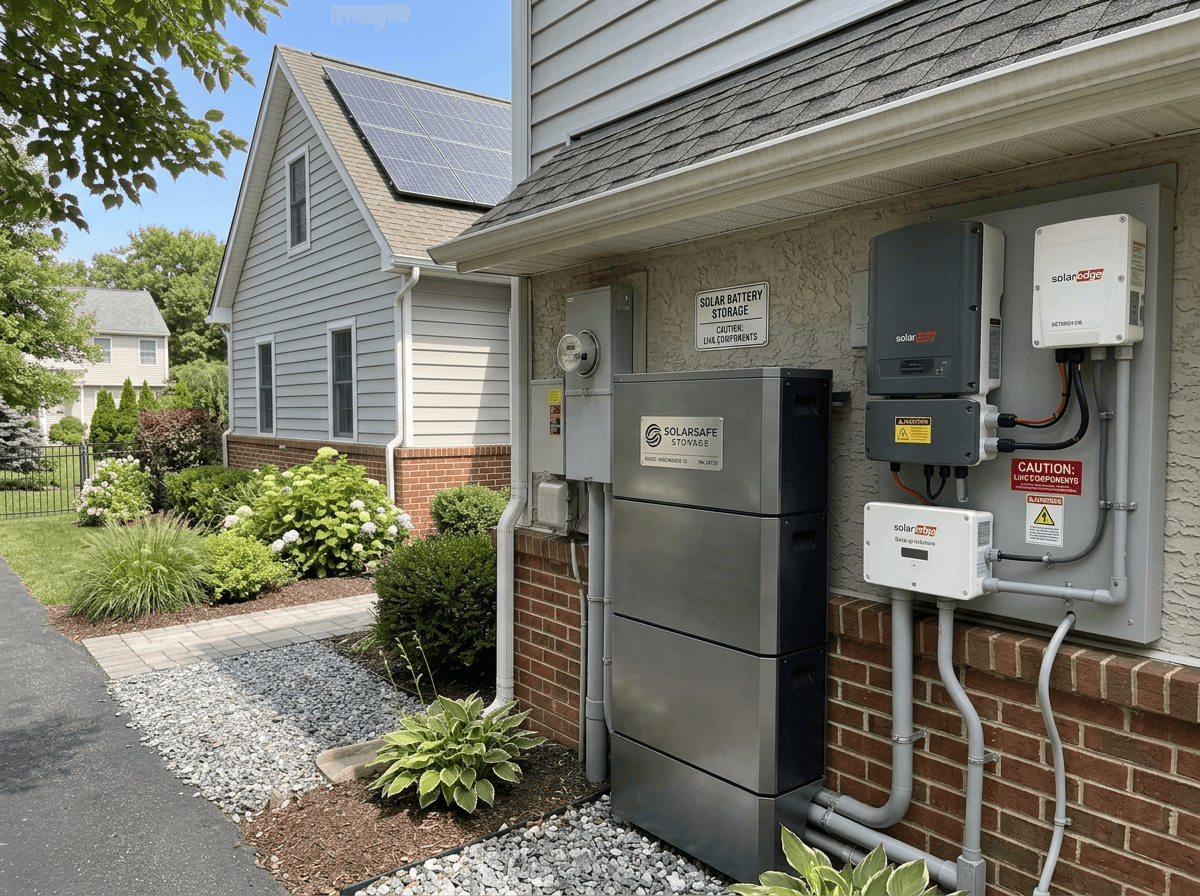
Solar energy has changed the way homeowners think about powering their homes, but one challenge remains: what happens when the sun goes down or the power grid goes out?
As more people invest in solar panels, they are looking for ways to get even more value from their systems and have greater control over their energy use. Solar battery storage is becoming an increasingly popular solution, helping homeowners make the most of their solar investment while preparing for unexpected power interruptions.
In this blog, we'll cover what a solar battery is, how solar battery storage works, the key benefits of adding battery storage to your solar energy system and the difference between a battery backup and a generator.
What Is a Solar Battery?
A solar battery is a device that stores excess electricity generated by your solar panels. Instead of sending all unused energy back to the electricity grid, the battery captures and stores it for later use.
For example, your solar panels often produce more electricity than your home needs during the middle of the day. Without battery storage, this surplus energy is typically exported to the grid. With a solar battery, that energy is stored and can be used during nighttime, power outages, or low production periods.
A solar battery works alongside your solar panel system and inverter to create a more efficient and reliable energy solution, helping you maximize the value of the electricity your system generates.
How Does Solar Battery Storage Work?
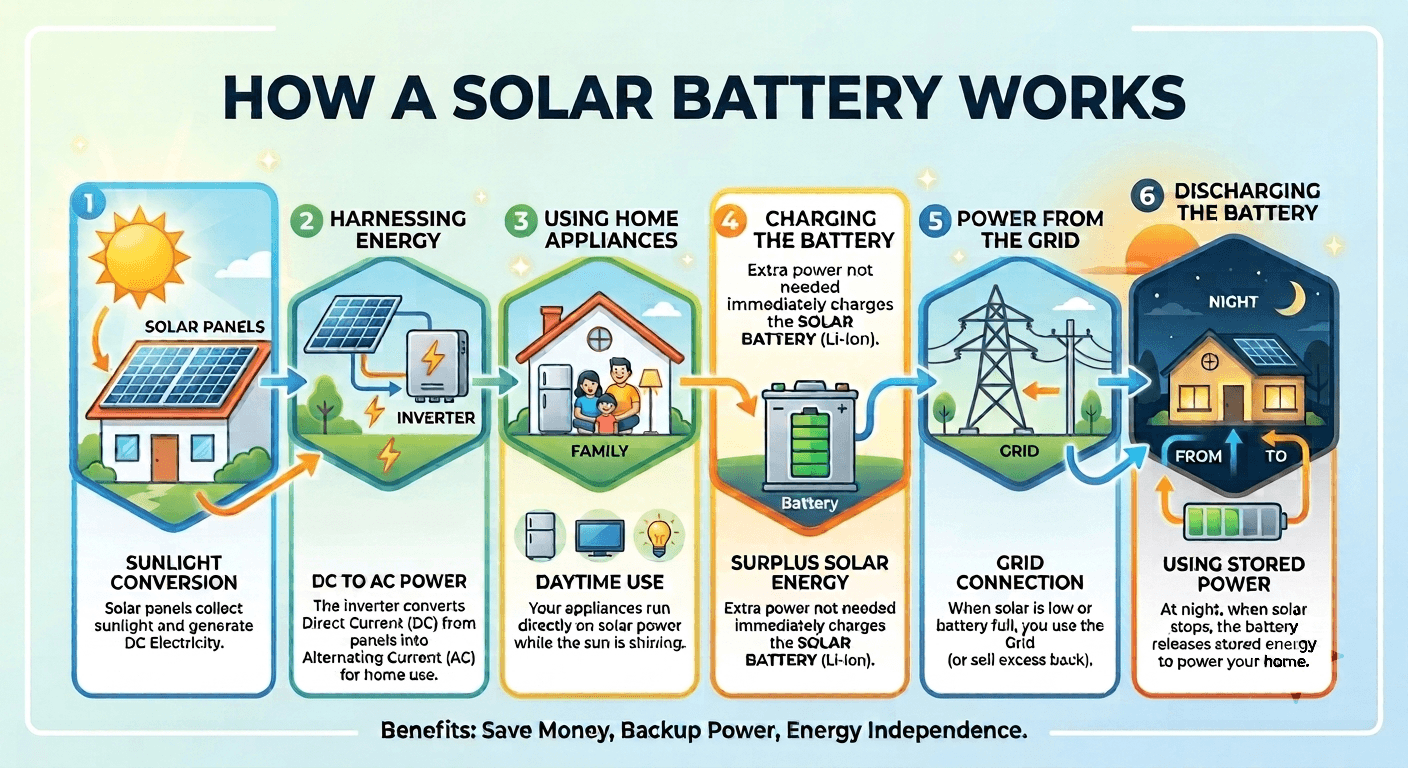
1. Sunlight Conversion
The process starts with your solar panels. Throughout the day, they capture sunlight and convert it into direct current (DC) electricity, which is the type of power generated by solar energy systems before it can be stored or used in your home.
2. Harnessing Energy (DC to AC Power)
The direct current (DC) electricity generated by your solar panels can't power most household appliances on its own. Instead, it flows to the inverter, which converts it into alternating current (AC)—the standard type of electricity used to power homes and everyday electronics.
3. Using Home Appliances (Daytime Use)
Once the electricity is converted into alternating current (AC), it's ready to power your home. During the day, while the sun is shining, your household appliances—such as your refrigerator, lights, TV, and air conditioner—run directly on the clean, renewable energy generated by your solar panels.
4. Charging the Battery (Surplus Solar Energy)
During peak daylight hours, your solar panels often generate more electricity than your home needs. That surplus solar power is sent to your solar battery, where it is stored for later use when your energy demand increases or solar production is lower.
5. Power from the Grid (Grid Connection)
Your solar system can maintain a two-way connection with the utility grid, allowing electricity to flow both into and out of your home when needed.
- When solar is low or the battery is full: When your system isn't generating enough electricity, your home can draw power from the utility grid to keep your appliances running.
- Selling power back: If your solar panels produce more electricity than your home and battery can use, the extra energy may be sent back to the utility grid. Depending on your location and utility program, you may receive credits through net metering.
6. Discharging the Battery (Using Stored Power at Night)
When the sun goes down, your solar panels stop generating electricity. This is when your solar battery becomes especially valuable. Instead of relying entirely on electricity from the utility grid, your system can automatically use the stored energy in your battery to help power your home during the night, reducing your dependence on grid electricity until solar production resumes.
Benefits of a Solar Battery
Installing a solar battery does more than store excess energy—here are three of the biggest benefits of adding battery storage to your solar system.
Save Money on Electricity Bills
A solar battery allows you to capture and store excess electricity generated by your solar panels for later use, rather than sending all of that energy back to the utility grid. When your panels aren't producing enough, you can use the stored energy to help power your home. By using more of the solar energy your system produces and relying less on electricity from your utility provider, a solar battery can help maximize your energy savings and give you greater control over your electricity costs.
For most homeowners in Pennsylvania, where residential electric rates are typically a fixed price per kilowatt-hour rather than time-of-user rates, a battery's primary benefit is increasing your energy independence and providing backup power during outages.
Reliable Backup Power
Power outages can occur without warning due to severe weather, grid failures, equipment issues, or other unexpected disruptions. A solar battery provides backup power by using stored energy to keep essential appliances and devices running when the utility grid goes down.
With the right battery capacity and system setup, you can maintain power for critical needs such as lighting, refrigeration, communication devices, and other important household equipment until grid power is restored.
Greater Energy Independence
One of the biggest benefits of a solar battery is greater energy independence. By storing and using more of the electricity generated by your solar panels, you can reduce your reliance on the utility grid and take greater control of your home's energy use.
This added control can provide peace of mind, especially in areas where power outages are common or electricity costs continue to rise.
Battery Backup vs. Generator: What's the Difference?
When comparing backup power options, battery backup systems and generators work in different ways to keep your home powered during outages. Understanding the key differences between these two solutions can help you choose the option that best matches your energy needs, budget, and backup power goals.
Battery Backup
A battery backup system stores electricity generated by your solar panels. When your home needs additional power—such as during a grid outage or periods of low solar production—the battery can supply stored energy to your home's designated backup loads.
Battery backup systems operate quietly, require minimal maintenance, and can help homeowners use more of the renewable energy their solar system produces by storing excess solar power for later use.
Generator
A generator can be added as an additional backup power source. When connected to the system, the generator can provide electricity during extended outages when the solar panels aren't producing enough power and when the battery storage is full.
Generators run on fuel sources such as gasoline, propane, natural gas, or diesel, allowing them to provide reliable backup power for longer periods.
Which One Is Better?
There is no best option, as it depends on factors such as your energy needs, outage frequency, and long-term goals.
A battery backup system may be the right fit for homeowners looking for quiet operation, low maintenance, and the ability to store solar energy for later use. A generator may be better suited for those who need longer-lasting power during extended outages. In some cases, combining a solar battery with a generator can provide a more comprehensive backup solution.
Whether you choose a battery backup system, a generator, or a combination of both, each option can help improve your home's energy resilience and provide greater peace of mind when the grid goes down.
Conclusion
A solar battery can help you get more value from your solar system by storing excess energy, reducing reliance on the grid, and providing backup power when you need it most. Whether your goal is greater energy independence, lower electricity costs, or added protection during outages, battery storage can be a smart addition to your home's energy strategy.
Contact Pinnacle Exteriors at (484) 350-6829 to schedule your FREE solar assessment with one of our specialists.